
Sunday, June 12, 2011

US Fracking Chemical Registry to go Live in a Few Weeks

EXCERPT:
"US Representative Maurice Hinchey, a co-sponsor of the FRAC Act, which seeks to regulate fracking under the Safe Drinking Water Act, plans to move ahead with the legislation, a spokesman, Mike Morosi, said.

He said that the creation of a voluntary chemical registry would not alleviate the need for Congress to pass federal legislation on fracking.

If the industry is willing disclose the information, they should have no problem with the disclosure provisions of the FRAC Act," he said."

Pertaining to the disclosure on the website: "However, chemical data that is considered part of a well servicing company's proprietary business information will not be posted on the website, Nickolaus said."

COMMENT:
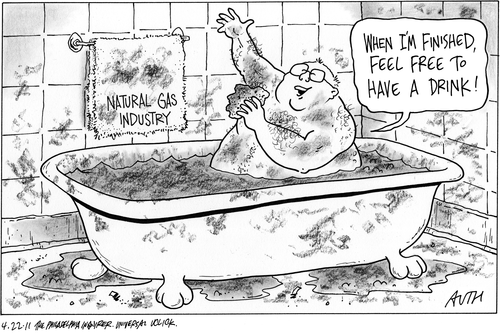
A great step in the right direction, yet with industry continuing to hide their "proprietary business information," some of the key toxic chemicals are being withheld from the public, medical teams, and locally elected governing bodies.  This is far from "disclosure." Full disclosure from industry is necessary in order to know the direct impact from industry's activities. After all, that is what industry continues to state when another water well is polluted....."Prove it was caused by our drilling.

Representative Markey states that industry's energy bills and activities are "Oil-Above-All".  And that is certainly what comes through with yet another industry caveat over the health, welfare and safety of the people, animals and ecosystems.


US Fracking Chemical Registry to go Live in a Few Weeks
Jim Magill, jim_magill@platts.com
Houston (Platts)
31 Mar 2011

An online registry in which exploration-and-production companies will voluntarily disclose the chemicals they use in their US hydraulic fracturing operations is set to be activated in a few weeks, but questions remain as to whether this will satisfy the many critics of fracking.

The registry, part of a website created as a joint effort of the Interstate Oil & Gas Compact Commission and the Ground Water Protection Council, "will go live in the second week of April," Mike Nickolaus, GWPC special projects director, said Thursday.

The architects of the website hope that its creation will help calm some of the concerns expressed by property owners and environmental groups over the potential threat that the drilling of natural gas wells could pose to groundwater supplies.

Nickolaus said the chemical registry will allow visitors to access information, on a well-by-well basis, on the components of fracking fluids used in oil- and gas-producing basins across the US. To date, about 75 E&P companies, representing about 80% of US shale gas production, have signed up to take part in the registry program.

A Land Out of Step With Time: Mora County--Sierran


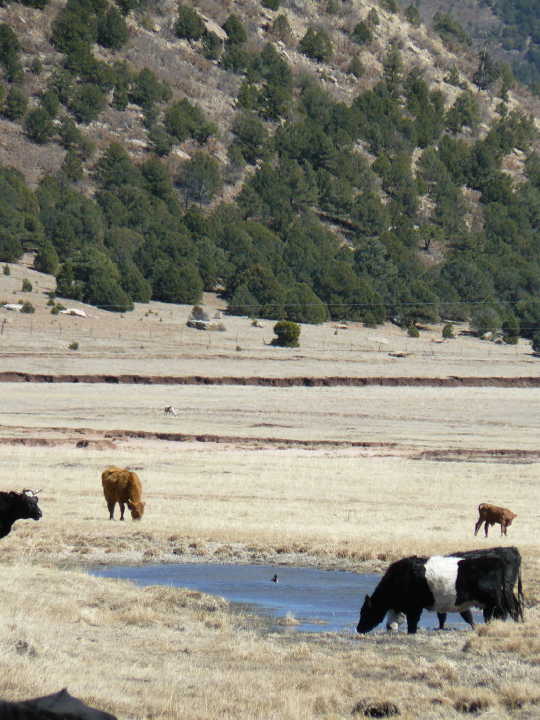
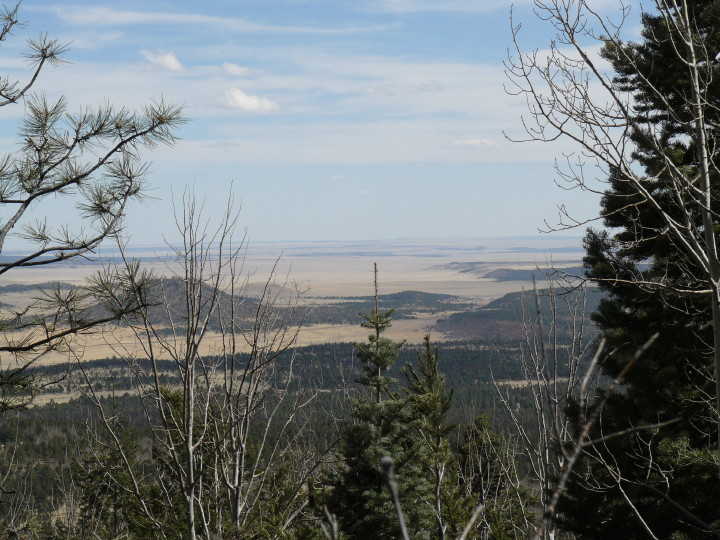
A land of beauty, clean air and water. A rare gem when “Nature today is considered a subsystem of the economy” yet “we cannot function without our ecosystems,” says Chilean economist Manfred Max-Neef. Unspoiled, Mora County sits at the brink of change; it is a land still possessing clean ecosystems few other lands hold intact. 

Mora County sits atop a basin of extractable gases, according to the Ronald Broadhead Report, that at best supposes three (3)  percent total organic carbons (TOC) and on average less than one (1)  percent TOC. No doubt the low prices and small reserve protect both San Miguel and Mora Counties (they share this Las Vegas Basin) from natural-gas drilling today, yet as we have seen, industry raises prices at will, and we speculate do not halt their extraction until all their resources are withdrawn from beneath our feet, come hell or high water.
 
Unless … there is a change in direction. 

Mora County has a new commission this year, and if its meetings are any indication of change in direction, this new leadership will pave the way for a refreshing model of possibilities in this land-based county rich in fertile land, clean water, air and abundant wildlife. Protecting these vital resources upon which the citizens depend for livelihood and a culture that predates corporate interests, commission chair Paula Garcia told a packed room at the March meeting “to not forget that while an economic development plan for Mora County is necessary, it must include holistic development, ‘whole measures,’ as indicators of health and wellbeing—the economic, human,
spiritual and social wellbeing of the community,” she said. “Mora County has demonstrated that people live well here, in part, due to our culture.”

At a time when state and federal budgets are running in the red, there is little money to support counties such as Mora, whose needs far outweigh the tax revenue generated. But today is also not a time to tax the citizens further, the commission agreed.
 
In spite of the shortfall from government agencies, citizens continue to move forward in innovative ways. A local nonprofit group, Collaborative Visions, has been working to develop the agricultural and sustainable living possibilities in the county, from organic agriculture to biomass fuels for heating the Mora County Courthouse complex. Drilling Mora County, an educational and proactive citizen group, has provided Mora County citizens with defensible documents and test results reflecting recent baseline water-well testing for hydraulic fracturing chemicals should the oil industry begin fracking here. Excitement over Community Rights Ordinances have become part of the local discussion in the county over the past few months based upon the courageous action taken by the Pittsburgh City Council in December 2010 to adopt a “Community Water Rights and Local Self-Government Ordinance” that prohibits industry from harming the citizens’ water or interfering with their right to making governing decisions on a local level.
 
The work by the Community Environmental Legal Defense Fund out of Pennsylvania is behind this ordinance and more than 120 such ordinances for communities across the United States that desire to protect their rights to clean air, land, water, and health from the ongoing egregious corporate activities that destroy ecosystems. 

While battle is being waged elsewhere, Mora County citizens are weighing the consequences as seen in other communities. It is truly a time of preparedness, and Mora County is thoughtfully moving ahead as it always has, in time and pace with its knowing of Nature, and the heart and soul of the people.

Maryland lawmakers vote to ban fracking

EXCERPT:
"We are not going to be like other states that drilled first and asked questions later,".....

COMMENT:
Proactive protective stances take courage on the part of elected officials when it comes to standing up to corporations who are ready to take "all" for themselves, their board of directors, and shareholders, leaving travesty on the land for those living at "ground zero."

State representatives introducing protective bills, Community Rights Ordinances protecting water and local self governance, and an involved citizenry add up to an act of democracy that bears the fruit of not only a protected land, but the will of the people.

Maryland lawmakers vote to ban fracking
By Brett Michael Dykes

Concerns continue to mount nationwide over the environmental hazards the natural gas industry may create via the controversial extraction process known as "fracking"--the fracturing of underground shale to access gas reserves. Cities have banned the practice, while energy investors are pressing natural gas companies to disclose more information on fracking. And in the latest legislative pushback, the Maryland House has voted to ban fracking in the state.

"We're not going to be like other states that drilled first and asked questions later," Maryland Delegate Heather R. Mizeur, the bill's sponsor, told the Washington Post. "We understand that second chances are expensive, so we should slow down and take the time to do this right the first time."
The bill's language restricts gas companies from drilling operations until the state's Department of the Environment completes a two-year study to evaluate potential fracking-related hazards to drinking water supplies and public health.

Maryland is among several northeastern states sitting atop the Marcellus Shale formation, which contains what geologists say is one of the largest natural gas reserves in the world. New York and New Jersey, which also are above the Marcellus formation, recently instituted similar moratoriums, as did the city of Pittsburgh.


Monday, April 25, 2011

Poisoning the Wells Fracking the Wind River Country

How a Small Wyoming Town Might Be the First to Prove its Water Damaged by Natural Gas Production
Despite the testimonies of the people living by gas drilling, the companies have yet to be held accountable for damages. That might change.

ANDREA PEACOCK
March 25th 2011
Pavillion, Wyoming.

Jeff and Rhonda Locker’s water changed abruptly one day in the mid-1990s while Rhonda was doing the laundry. A Denver-based gas company was working over an old well in back of their house, when the wash water turned black. “It happened just like that,” Jeff Locker says. “I stopped him and asked him what he did to our water, and of course he didn’t do anything to our water… It’s been bad ever since.”

Donna Meeks’ well water was so good, she used to haul it to town for the school office coffee pot. Neither she nor her husband Louis noticed anything wrong until her co-workers stopped drinking the coffee; it was 2004, and a Canadian company, EnCana, had just drilled a new well about 500 feet from the Meeks home. Some visiting friends later said they noticed the water tasted and smelled like gas, but didn’t want to be rude by saying anything about it.

John and Cathy Fenton had no reason to suspect there was anything wrong with their water—it tasted fine. But just to be neighborly, they went along with the Lockers, the Meeks, and other Pavillion-area residents when the Environmental Protection Agency came in 2009 for an initial round of testing. That’s when they found out that their family had been drinking water laced with methane. Follow-up tests a year later found a whole soup’s worth of semi-volatile organic compounds in the family’s stock well....continued....

Cattle vs. Conoco: How Gas Fields are Crowding out New Mexico Ranchers

By ANDREA PEACOCK
March 24th, 2011
Blanco, New Mexico.

Chris Velasquez sees the impacts of gas development in the San Juan Basin of northern New Mexico through the eyes of a rancher, and those of a man whose roots in this country pre-date both the gas rigs and the arrival of Anglos.

He and his dad ran cattle, until recently, on a grazing allotment called the Rosa, rolling high desert lands punctuated by bluffs and arroyos, ringed by mesas, adjacent to the Carson National Forest on the east, the Southern Ute reservation to the north, and bordered on the west by Navajo Lake. In a way, it’s what’s left of Velasquez’ ancestral homeland. “We used to live where the Pine River and the San Juan meet up here, then when they built the lake, it either was drown or move,” he says. In 1962, the Bureau of Reclamation completed a dam stretching three-quarters of a mile across the San Juan River. The idea was to control flooding and provide irrigation water for the Navajo tribe. It also displaced Velasquez’ community. “All my ancestor’s on my mom’s side, well on my dad’s side too, came from right up here,” he says. “My grandpa and my grandma on my mom’s side, they were the second farm below the dam. They got chased out too. From right here on, all the people who lived here—they were all Spanish people—relocated. Threw them to the four winds. Scattered them all over the place.”

The Velasquez family wasn’t blown far: his dad bought a place near Blanco, New Mexico, the nearest town with a name, a short drive west and south of their former home.  The entire clan now lives and ranches on about 320 acres they share with 17 gas wells. “My dad’s the one that started the ranch, but we’ve always had animals,” he says. It was the former owners who sold the mineral rights back in the 1930s or 40s. “So they’ve been after this area for a long time,” he says. “They’ve been hammering it, it didn’t happen overnight. They had a vision for it.”.....continued..

Drafting Nature's Constitution: Simply regulating pollution will never really stop it--Yes! Magazine

Mari Margil
March 2nd 2011

The environmental movement, with its army of professional advocates, lawyers, grassroots campaigners, and dedicated funders, has been around for decades. Yet nearly every biological indicator shows a planet in crisis—and poised to unravel faster as climate change disrupts already-shaky ecosystem functions.

Mari Margil, associate director of the Community Environmental Legal Defense Fund (CELDF) believes it's time for different tactics. The nonprofit agency used to work within the body of existing environmental law—helping impacted residents file lawsuits or appeal corporate permits—to protect communities from environmental damage. But a series of blocked efforts, often made worse by the very agencies meant to protect the environment, convinced the group that more fundamental changes were necessary.

"Our system of environmental laws and regulations don't actually protect the environment," says CLEDF's Mari Margil. "At best, they merely slow the rate of its destruction ... We weren't helping anyone protect anything."

The organization has since changed its goals, working with citizens from all over North and South America to literally rewrite local laws in ways that allow people to speak up for their communities, watersheds, forests, and air.
....continued......

Megaloads, water company: Ordinances help local communities fend off corporations

KEILA SZPALLER
 March 20, 2011

Last year, ExxonMobil publicly reared its head in Montana with a plan to shoehorn 200 megaloads onto U.S. Highway 12. Since then, the Carlyle Group announced the pending purchase of the California company that owns Mountain Water in Missoula.

Activism is alive and well here, and Missoulians are writing letters, signing petitions and marching in the streets. In City Hall, Mayor John Engen is getting emails calling for the city of Missoula to buy Mountain Water.

On the other end of town, in the wee hours of March 10, hundreds of activists temporarily plugged Reserve Street when the first megaloads rolled through Missoula - these big rigs belonging to ConocoPhillips. But the giant trucks passed anyway, just as they had inched along the federally protected highway along the Lochsa River.

When it comes to the will of the people and corporate autonomy, the deck is stacked in favor of corporations, said Zack Porter, a spokesman for All Against the Haul. It is just one group that formed to fight Big Oil from building a permanent corridor through Oregon, Washington, Idaho and Montana for these loads, which can weigh as much as 700,000 pounds.

"Right now, the burden of proof is on us to demonstrate these projects are unsuitable. The burden of proof should be on the corporations," Porter said.......continued........

Tackling Corporate Power, One Town at a Time: What’s a town to do when state regulatory agencies don’t keep corporate drilling out?--Yes Magazine

by Mari Margil
March 17th 2011

As more information about the dangers of hydraulic fracturing, or "fracking," (a technique used during natural gas drilling) emerges, more and more cities and municipalities are organizing to keep drilling and fracking out of their own communities, but are surprised to find that they do not have the legal authority to say “no” to these corporate activities.

Last week, Mountain Lake Park, Maryland, with fewer than 2,500 residents, became the latest community to do something about this, adopting the state’s first ordinance banning corporations from natural gas drilling.

Drafted with the help of the Community Environmental Legal Defense Fund, the ordinance comes on the heels of the City of Pittsburgh’s ordinance banning drilling by corporations, adopted in November. Both ordinances also eliminate the authority of corporations to wield their constitutional rights to override the municipality's wishes. Such constitutional rights and powers are often used by corporations to overturn local and state laws adopted to protect the environment and public health.
 
More and more communities are organizing to fight drilling and fracking, but are surprised to find that they do not have the legal authority to say “no” to these corporate activities.

A similar ordinance was recently introduced in Wales, New York; it comes up for a vote in April. If adopted, it would make Wales the first community in New York to restrict corporate rights and ban corporations from drilling.
....continued.....

Fracking Will Cause 'Irreversible Harm': Shale-Gas Extraction After-Affects Will Threaten Drinking Water, Could Jeopardize Agriculture, Expert Says--Montreal Gazette

 Kevin Dougherty
March 4, 2011
 
QUEBEC - A geological engineering professor whose specialty is rock mechanics and hydrogeology says hydraulic fracturing to free natural gas from shale rock formations will cause "irreversible harm" lasting thousands of years.

And the gas companies will be long gone, leaving behind costly remediation, Marc Durand said in an interview, suggesting the gas producers should be forced to establish a reserve fund.

"The billions required would be much more than all the profits beckoning now," said the retired Université du Québec à Montréal professor.

The circulating gas left behind will threaten the water Quebecers drink and could jeopardize agriculture, he said. The Utica shale field gas deposits between Montreal and Quebec City lie under some of the best farmland in the province.

"Fracking" is the technique of pumping a mixture of water, sand and a cocktail of toxic chemicals under pressure into wells drilled horizontally to liberate the gas from the shale.....continued.....

The Privatization of Municipal and County Governments

 In the March 9th Amy Goodman/"Democracy Now!" report, March 9th, 2011, Naomi Klein was interviewed.  Listen to what she has to say about the current bill introduced into the Michigan legislature and to her interview with Naomi Klein:  click on heading.....to listen to youtube of Democracy Now!
This is a summary of part of it "Democracy Now!" 3/9/2011:

 A bill in the Michigan state legislature would in the case of an emergency, give an appointed person or a firm (corporation) the authority to  dissolve the municipal/county government and run it.  This law being passed in Michigan now could happen anywhere, according to Naomi Klein, where a corporation would "become" the government of that municipality or county.

 This has happened in Sandy Springs, Georgia.

Currently we are seeing this occurring in the privatization of our school systems.  When Katrina occurred, the public school system was dismantled in New Orleans and replaced with privatized publicly funded charter schools. I heard on Democracy Now last week that this same dismantling is
Rhode Island where minority children will have no opportunity to attend a publicly funded school system.


COMMENT:
The efforts we put in place on the local county and municipality levels to exercise our rights to "local self governance" are critical at this point in history. Never before have we seen such actions coming forth in this country.  Germany under Hitler, yes, but not in the United States of America until now.

 New Mexico State Constitution:
"Right of self-government. “The people of the state have the sole and exclusive right to govern themselves as a free, sovereign and
independent state. ” N.M. CONST., Art. II, § 3."

The Community Environmental Legal Defense Fund (celdf.org) has written over 125 community rights ordinances expressively exercising the right of "local self governance" for communities across the United States and abroad to protect human rights and nature's rights---clean air, water, land, ecosystems.

Drilling Mora County


Saturday, April 23, 2011

Colorado Number Two in Carcinogen-Laced "Fracking" Fluids--Denver Post

Allison Sherry
 04/22/2011

WASHINGTON — Colorado ranked second only to Texas in terms of the number of gallons of carcinogen-laced "fracking" fluids used in oil and gas extraction between 2005 and 2009, according to congressional Democrats.

A 30-page House Energy and Commerce report — the second release in an investigation into hydraulic fracturing — shows that 1.5 million gallons of fracking fluids containing a carcinogen were used in Colorado in that time, compared with 3.8 million gallons in Texas and 1 million in Oklahoma. The report does not show the concentrations of those chemicals or that the carcinogens, including naphthalene and benzene, have endangered drinking water near the drilling sites in Colorado.

State leaders charged with regulating Colorado's energy industry say the report's findings are not a surprise.

"Generally, we know what kinds of chemicals are in frack fluids," said Dave Neslin, director of the Colorado Oil and Gas Conservation Commission. "We're still looking at it (the report). But from a high level, we know what they are and how they're used and how they're used in other parts of our lives.".....continued.....

Tuesday, March 29, 2011

Germany’s solar panels produce more power than Japan’s entire Fukushima complex

 
Germany is the world leader in installed solar photovoltaic panels -- and they also just shut down seven of their oldest nuclear reactors. Coincidence? Maaaaybe... Anyway, it's worth noting that just today, total power output of Germany's installed solar PV panels hit 12.1 GW -- greater than the total power output (10 GW) of Japan's entire 6-reactor nuclear power plant.

Now before the trolls come out, let me just note that 12.1 GW is max power (the output whose name you'd love to touch). The panels generated that much at one instant in time -- when the sun was at its apex -- but of course solar power production varies with the weather and the time of day. To find out how much energy those panels generated today in total, you'd have to calculate the area under that curve in the lower right hand corner. (Which, come to think of it, we should probably use as the CAPTCHA on the comment field on this post.) ....continued.....

Gilbert Armenta's Story of Oil and Gas in San Juan County, NM--Part IV

PART IV

And then it goes on to say, "Give us this day our daily bread." It is not saying "Give us 10,000 oil and gas wells." Or what is it saying? I get it. We are asking to be fed what we need every day what we need until the day we die.

I was born in 1946.  When I was three months old my mom and dad did a new oil and gas lease for 5 more years. Well, what do you know? They drilled a gas well. Now this oil and gas lease lives on forever. When they drilled the first well, it caught on fire and they had a mess all over the farm trying to put it out. You might ask, "Did they pay for the damage they did?"  You bet they did. A total of $200 'take it or leave it.'

When mom and dad agreed to the lease they were told that all the gas would be gone in 10 years. Well, many 10 years have past and now we have over 12 wells and counting--on just 160 acres. Each well takes over five acres to drill. So, as you see, the oil and gas companies have taken all, most all, of my farm.

Now, to drill a gas or oil well will do them no good. They need to sell their product. That means pipe lines--miles and miles of them.

Yes, on the farm you cannot build or work the land without asking the oil and gas company, first. This is by law, and yes, the gas companies went to the goverment and passed this laws for them.

Next: What happend after the first gas well was drilled in 1950?

 Gilbert

Saturday, March 19, 2011

Gilbert Armenta's Story of Oil and Gas in San Juan County, NM--Part III

Part 3

Our father who art in heaven halo be your name thy kingdom come thy will be done on earth as it in heaven. How many oil and gas wells do you think there are up in heaven? Well here in the San Juan Basin we have about 50,000 or more so it must be a mess up there you think? About 1920 there was a great drought here in the San Juan Basin and there was no crops to sell and the livestock were poor. And then came the great depression of the 1920's and 30,s the land taxes and debts could not be met and those that could not pay lost their lands. Most of those that lost their lands were Spanish.

The white man that had money got the land by paying the taxes that were not paid. That was done because the white man ran the government here and knew what lands were up for sale for lack of none payment of taxes. From the 1920,s to the 1950,s the oil men would come and get a 5 year lease but would not drill on the land they sometimes would pay about $25 for a 5 year lease. Well for not drilling $25 was OK and everyone got used to the little money they were getting. Well what do you think happen next? 


It was not good next.       Gilbert  March 14, 2011


Gilbert Armenta's Story of Oil and Gas in San Juan County, NM--Part II

 Part II:

Oil and Gas what is it? It is dead matter. When God created the heavens and the earth he said it is good and he made man and gave man dominion over all living things.

Well as you see oil and gas is dead and as man we are not to use it. In 1900 or about oil was located in the San Juan Basin down hole about 80 feet. In 1920 Gas was found about 600 feet down. As I said before in 1598 the Spanish came as farmers and herders and for over 250 years that is what they did. They also did a little mineing for gold and sliver with slave labor (native people) but for the most part it was farming and raising livestock. In the 250 years that spain ruled we became a mix blooded people. We had no interest in oil and gas. In 1846 the United States went to war with Mexico a poor country and we were defeated and we lost are lands. That is when the white man came in and started to rape the people and the land. 


The white man are very greedy living in harmony is not there way take take take is. In 1860 a great war was going on here that is when my people came hear to the San Juan Basin to make a new life they came with there livestock and to farm. It was good land and soon they were doing very well. The hispanos controled 86% of the land they were very well off. 

Next:  how we lost our lands and our way of life to oil and gas.     Gilbert Armenta   February 9th 2011


Gilbert Armenta's Story of Oil and Gas, San Juan County, NM-- Part 1

Part 1--Writing at the request of Ian Perrin, South Africa, a citizen group resisting Royal Dutch Shell's natural gas exploration of the Karoo  (www.fractual.co.za):
 
Ian if you know the history of the new world it started in 1492 and hear in 1598 that is when my story begins. The Spanish government settled hear then. No females came at this time so as you can see we (I) am of Spanish and Native American Blood. For 200 years plus we were part of the Spanish rule. Now Spain received this new World from God as the King of Spain said at that time. Now if you were a Vescino (subject) you could ask the Crown for a Grant (land) and many Grants were given to the her subjects. Many races were sent here by Spain (Spanish Blacks Jews etcs.) The times were hard here. 


When Spain settled here large herds of horses, sheep,goats, cattel, also pigs,ect, came with them and also all kind of plants and trees. next Mexico (1821) my Great Grandfather was born in 1817 four years before Mexico independence from Spain. My great grandfather Jose Armenta came to the San Juan Basin in 1867 his wife died and he bought my great grandmother ( custom of that time) she was Native American. My grand father Romaldo Armenta was born in 1896 USA (united states to over in 1848) and he and my grand mother (also a Native American) had my father in 1916 (new mexico USA became a state in 1912) I was born in 1946. 

Next I will tell you about the start of oil and gas.                Gilbert Armenta , January 22, 2011

Friday, March 11, 2011

Fracking Will Cause 'Irreversible Harm': Shale-Gas Extraction After-Affects Will Threaten Drinking Water, Could Jeopardize Agriculture, Expert Says--Montreal Gazette

By Kevin Dougherty
March 4, 2011

QUEBEC - A geological engineering professor whose specialty is rock mechanics and hydrogeology says hydraulic fracturing to free natural gas from shale rock formations will cause "irreversible harm" lasting thousands of years.

And the gas companies will be long gone, leaving behind costly remediation, Marc Durand said in an interview, suggesting the gas producers should be forced to establish a reserve fund.

"The billions required would be much more than all the profits beckoning now," said the retired Université du Québec à Montréal professor.

The circulating gas left behind will threaten the water Quebecers drink and could jeopardize agriculture, he said. The Utica shale field gas deposits between Montreal and Quebec City lie under some of the best farmland in the province.

"Fracking" is the technique of pumping a mixture of water, sand and a cocktail of toxic chemicals under pressure into wells drilled horizontally to liberate the gas from the shale.

But Durand noted that fracking gets out only 20 per cent of the gas, a figure confirmed by Canada's National Energy Board.

After maybe eight years of production, the gas companies will seal - and forget - the wells, Durand said.

The rock formations shattered by fracking will be "thousands of times more permeable," allowing the remaining 80 per cent of shale gas and underground water, 10 times more salty than sea water, to continue circulating, bubbling to the surface through the disused gas wells.

Over time, methane could leak into the groundwater and gas leaks could gush, uncontrolled, into the air...continued....